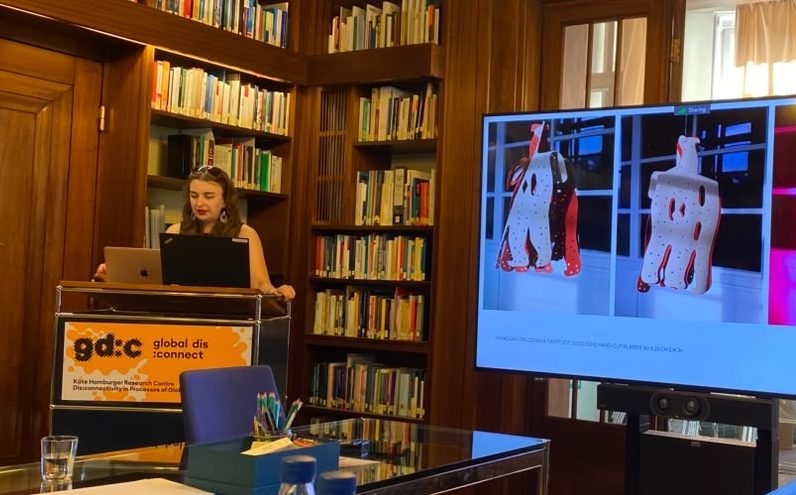
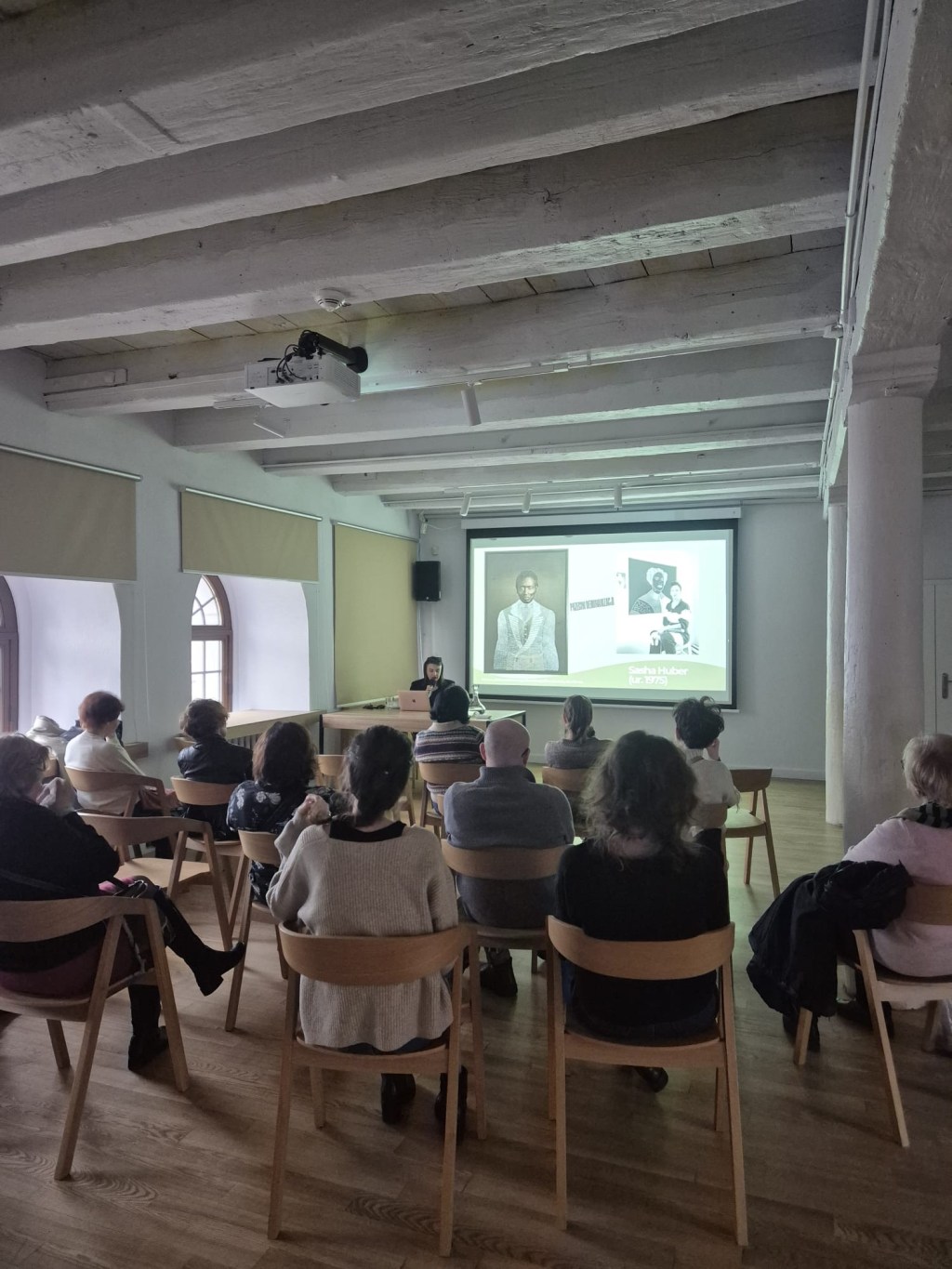
Last week of July I had the pleasure of participating in the 2026 Käte Hamburger Research Centre global dis:connect summer school in Munich! This year’s theme, Worlds in the Lab: Experimental sites if dis:connectivity, prompted many questions, how do laboratory sites mediate between global and local scales, between human and more-than-human? What asymmetries and disruptions may arise? How is knowledge produced in those environments? As an art historian and curator, I found those questions both interesting and challenging. My project presented during the summer school was about my curatorial interventions at the historical villa in Poznan. This complex and layered site used to serve as a laboratory (in many senses). Presenting my work at another layered villa, in Munich, was so interesting! Sister frequencies, for sure! I took so many pictures during the week that I will continue the story throughout this week. In the meantime, I wanted to thank the INCREDIBLE gd:c team that came up with such an amazing idea, Clemens, Aliena, and Susanne, you rock!! You brought so many amazing researchers together and provided a productive, creative program that fostered many ideas – still uncovering a lot of notes from the lab book – on that, in another post, because it deserves praise in itself. And to all the amazing participants I had pleasure meeting and getting to know – will miss you all and hope to cross paths soon! All of the discussions and excursions left beautiful memories! She you soon!


Zooming in and zooming out, looking at many meanings and dis:connections, the framework of the laboratory provides! The great team conceptualized the format of an assay, a compressed experiment: a focused, time-boxed intervention that tests a question, method, or material through an active, participatory format. This format generated many questions and encouraged hands-on, experimental workshops. I came up with an “A4 Counter Laboratory”, a quick mapping exercise that allowed us to zoom in and look closely at the villa and its surroundings. This exercise was inspired by three curatorial strategies – contamination, mutation, and hosting – that I explored with two contemporary artists in 2024 and 2025, Julia Królikowska and Agnieszka Grodzińska at the historical villa in Poznan (Wieniawskiego 3). Very happy to bring some of my curatorial practice and research to Munich! During the week, all the participants worked on the lab book, a collective notebook, a genius idea! The lab book is a shared record in process; it invites notes, photos, ideas, as well as mistakes and corrections – such a great tool to think about communal and horizontal knowledge sharing.