The joy that brings Henry Taylor’s exhibition “B Side” to the art geeks is immaculate! Rich in references, from pop culture, art history, music, sports, and politics, Taylor’s visual world is full of color, bold statements, symbolism, satire, humor, and criticism. As curatorial statement mentions, the artists “dynamic composition echoes the complexity and rhythmic, improvisational quality of jazz.” Couldn’t agree more! Depicting youth and elders, family and friends, musicians, artists, activists, sports champions, and many more, Taylor is celebrating Black talents across generations. Whitney Museum’s new classic!
Here are some memorable works from the exhibition.
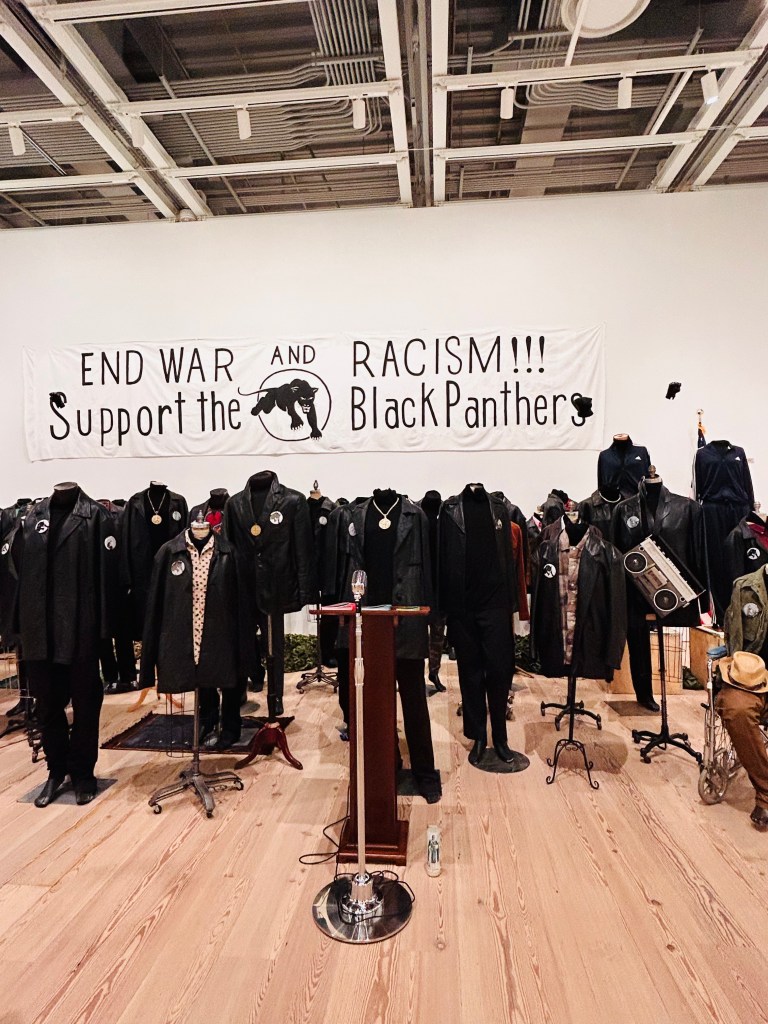

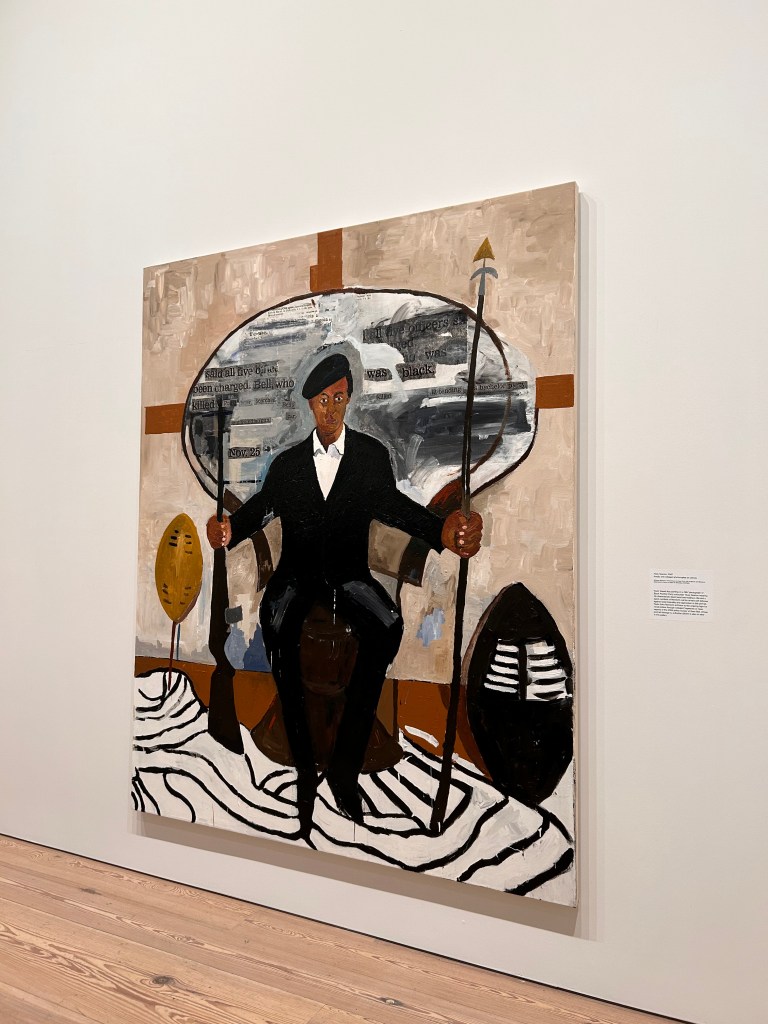
This particular piece, connecting the past and present of the fight against racial injustice feels like a grand memoire. And it’s especially personal, considering Taylor’s brother, Randy, was a member of the BPP’s chapter in Ventura, CA. Among many mannequins dressed in black leather jackets, there are many references to Panafricanism, imprisonment, music, religion, healthcare, beauty, and people directly involved in BPP, or indirectly, through the Panther’s legacy. Installation is framed by two powerful images, on the right side, with a painting of Huey P. Newton, and on the left side by 15 photographs of young Black people killed by police.
1. Antwon Rose Jr. (2000-2018)
2. Dominique Clayton (1987-2019)
3. Michael Brown (1996-2014)
4. Botham Jean (1991-2018)
5. Christian Taylor (1995-2015)
6. Walter Scott (1965-2015)
7. Elijah McClain (1996-2019)
8. Breonna Taylor (1993-2020)
9. Tamir Rice (2002-2014)
10. Freddie Gray (1989-2015)
11. Jordan Edwards (2001-2017)
12. Amadou Diallo (1976-1999)
13. Sean Bell (1983-2006)
14. Alton Sterling (1979-2016)
15. Philando Castile (1983-2016)
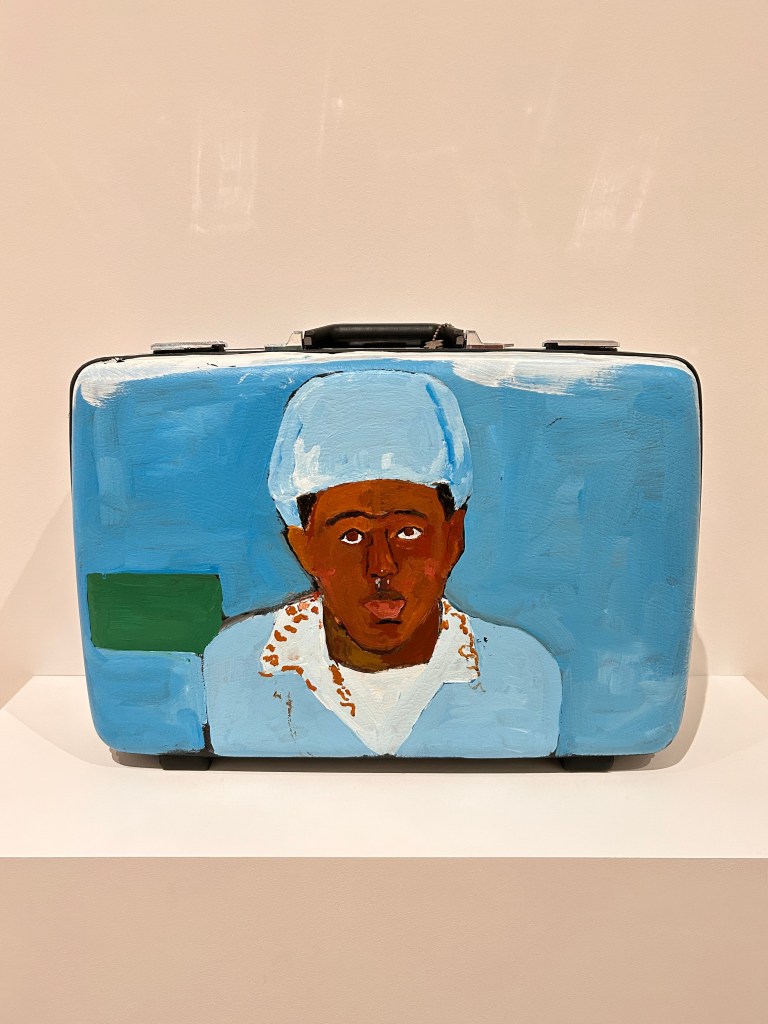

Tyler the Creator, Creator-the Grammy Award-winning rapper, singer-songwriter, record producer, and founding member of the music collective Odd Future, depicted on a suitcase. This piece is referencing the ID-like picture from the “Call Me If You Get Lost” album. A suitcase was used by Tyler on the alternative vinyl cover of the record and in his shows as a prop.
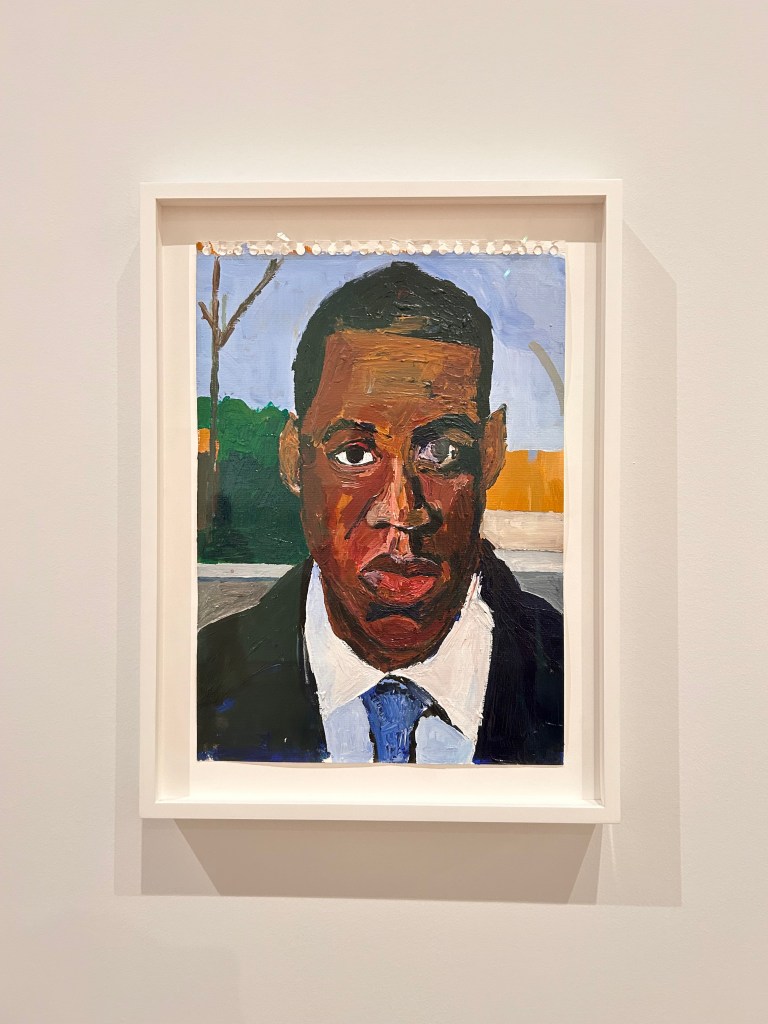
Jay Z’s portrait commissioned for the cover of the 2017 holiday issue of The New York Times Style Magazine and painted from memory. The title of the piece “I am a Man” is a reference to the 1968 Memphis sanitation strike.
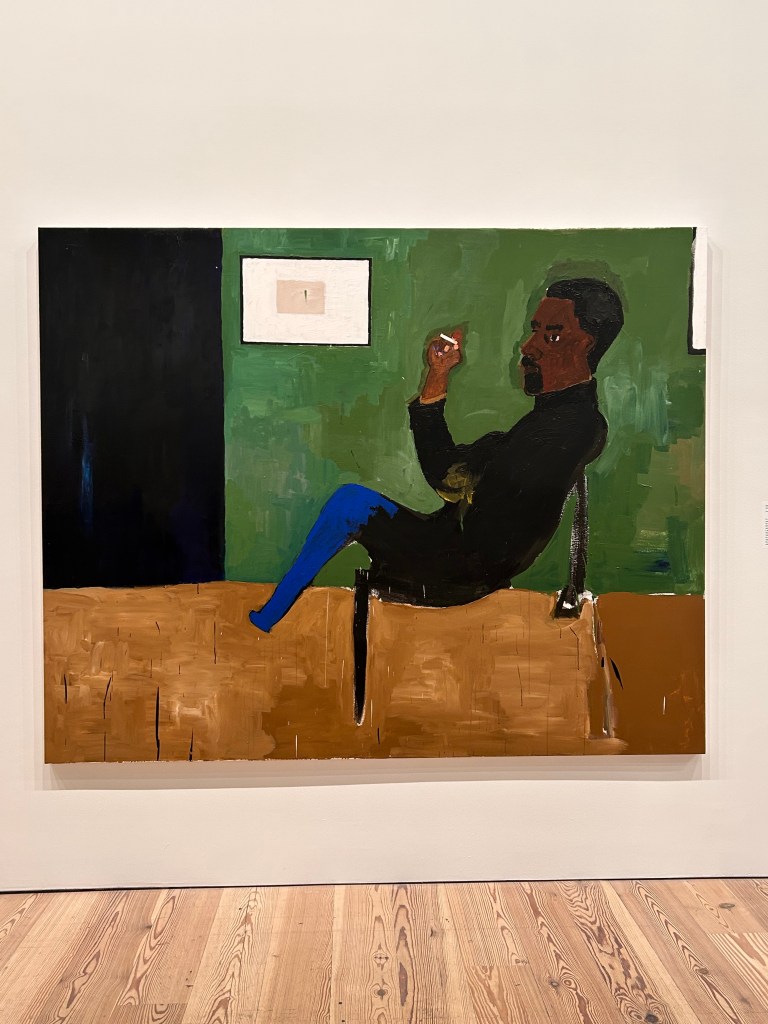
By portraying Eldridge Cleaver, the American writer, political activist, and Black Panther Party Minister of Information, Taylor adapts Whistler’s 1871 painting of the artist’s mother.
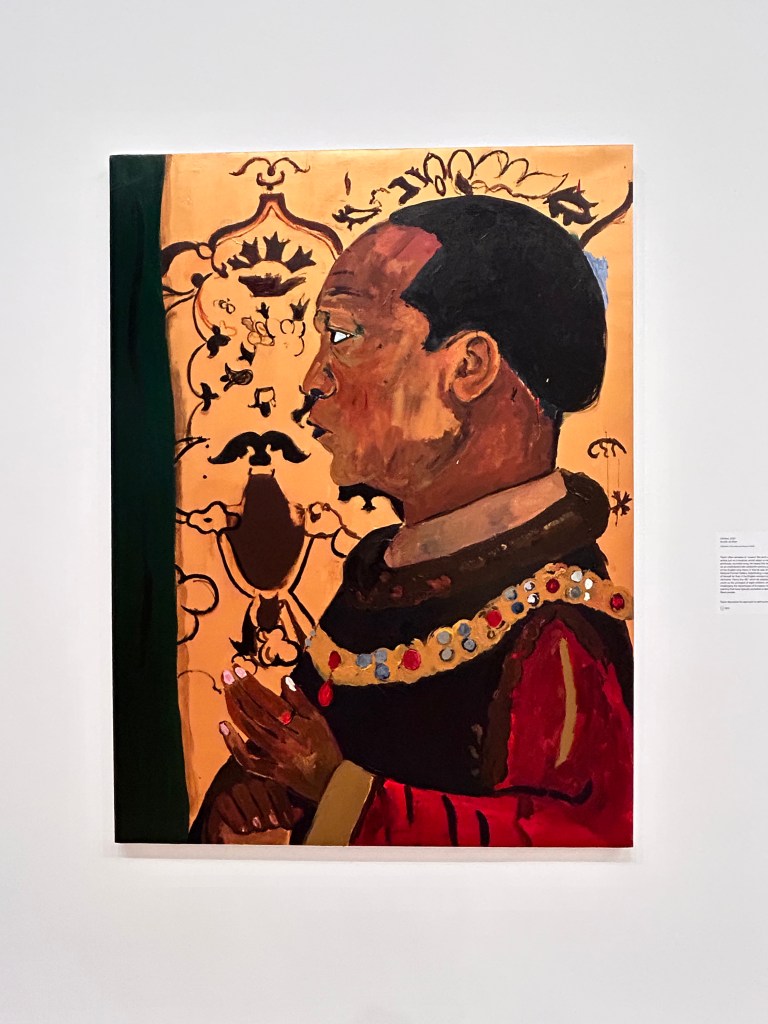
In one of his self-portraits, Taylor referenced an unattributed late-sixteenth-century painting of the English king Henry V that he saw at London’s National Portrait Gallery.
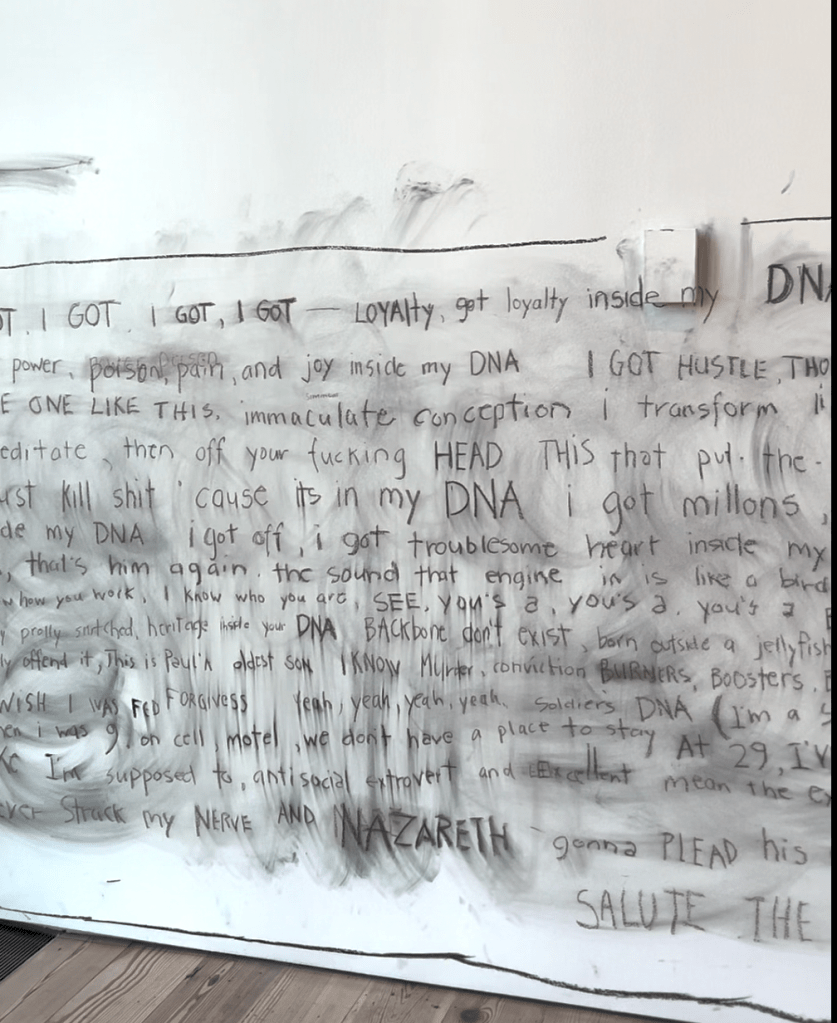
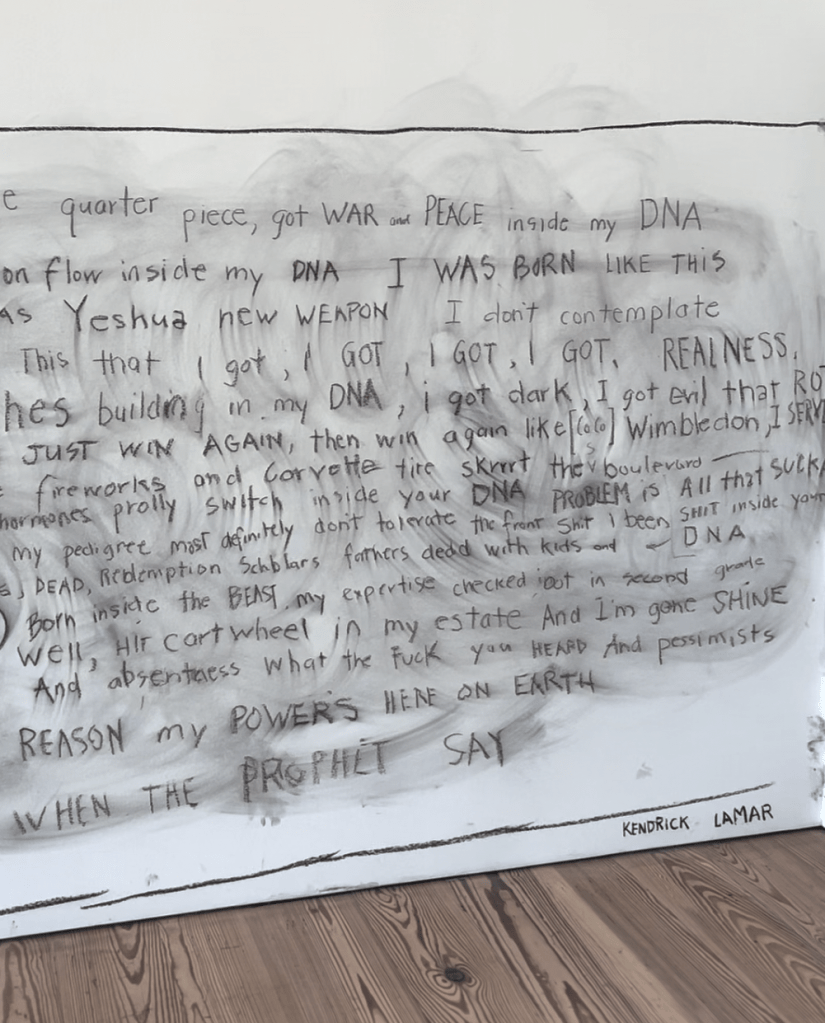
This long strip of rap lyrics is derived from the “DNA” song by Kendrick Lamar, a Pulitzer-winning rapper and great lyricist.

From 1984 to 1995 Taylor worked as a psychiatric technician on the night shift at the now-shuttered Camarillo State Mental Hospital, where he cared for adults living with developmental disabilities or mental illness as well as those seeking treatment for substance use disorders.
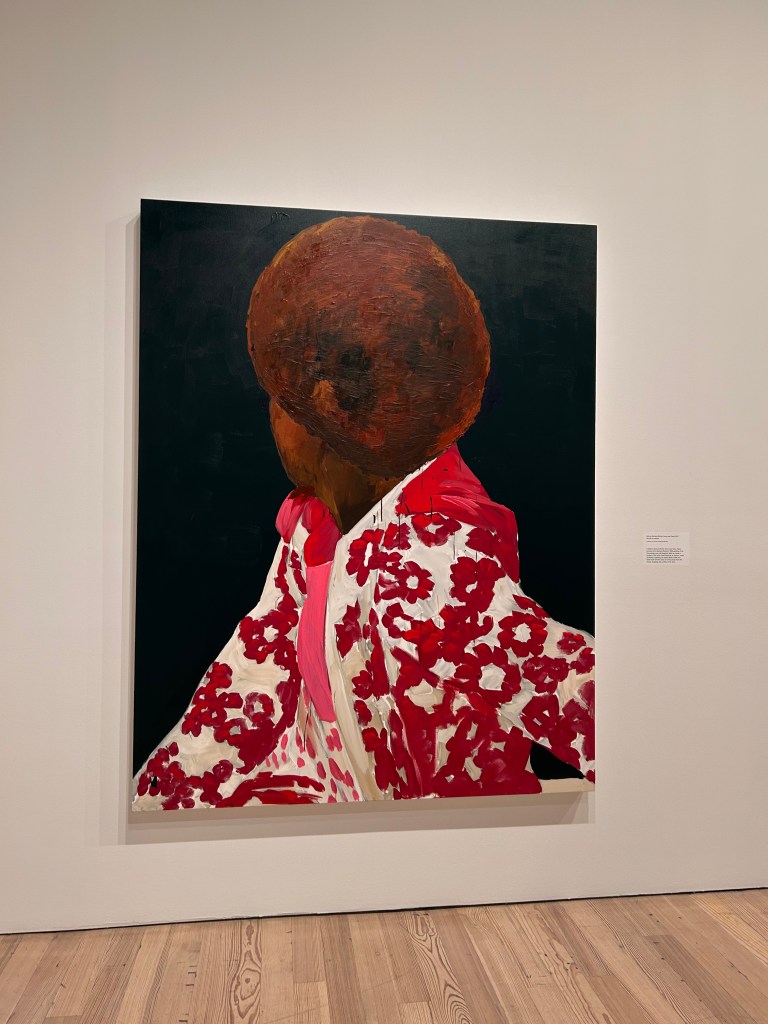
The portrait titled “Before Gerhard Richter there was Cassi,” is an homage to Cassi Namoda, a young Mozambique-native painter whose work transfigures the cultural mythologies and historical narratives of life in post-colonial Africa. The reference is the depiction of Betty, the daughter of Richter’s.
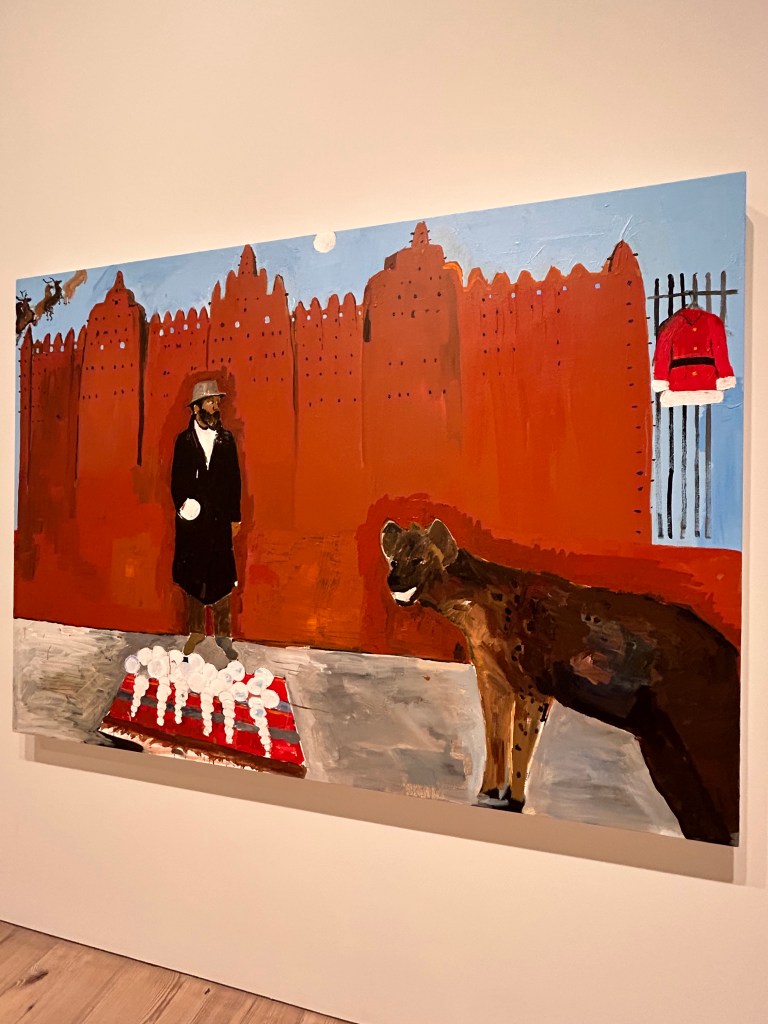
And finally, in “Hammons meets a hyena on holiday” Taylor is referencing the influencing piece “Bliz-aard Ball Sale” performed by David Hammons in 1983.
Henry Taylor, “B Side,” Whitney Museum of American Art, OCT 4, 2023–JAN 28, 2024
Photos taken during the exhibition by Julia Stachura.
 Julia stachura
Leave a comment