Overcoming the shame culture
It seems very likely that the structuring of associations and attachments around the affect shame is among the most telling differentials among cultures and times: not that the entire world can be divided between (supposedly primitive) ‘‘shame cultures’’ and (supposedly evolved) ‘‘guilt cultures,’’ but rather that, as an affect, shame is a component (and dfferently a component) of all.
Eve Kosofsky Sedgwick*
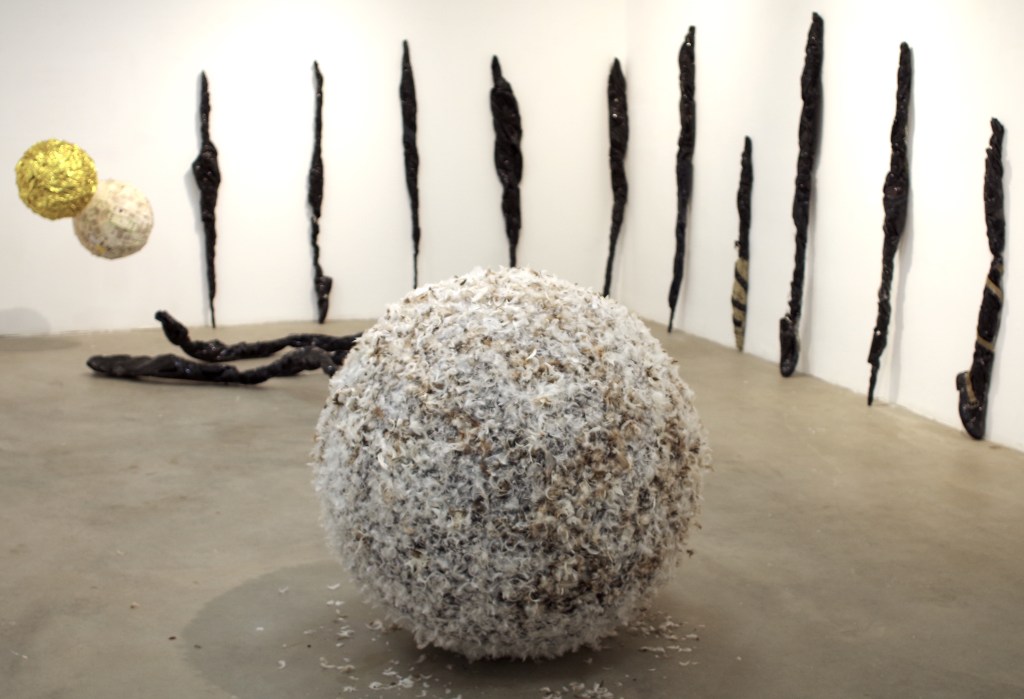
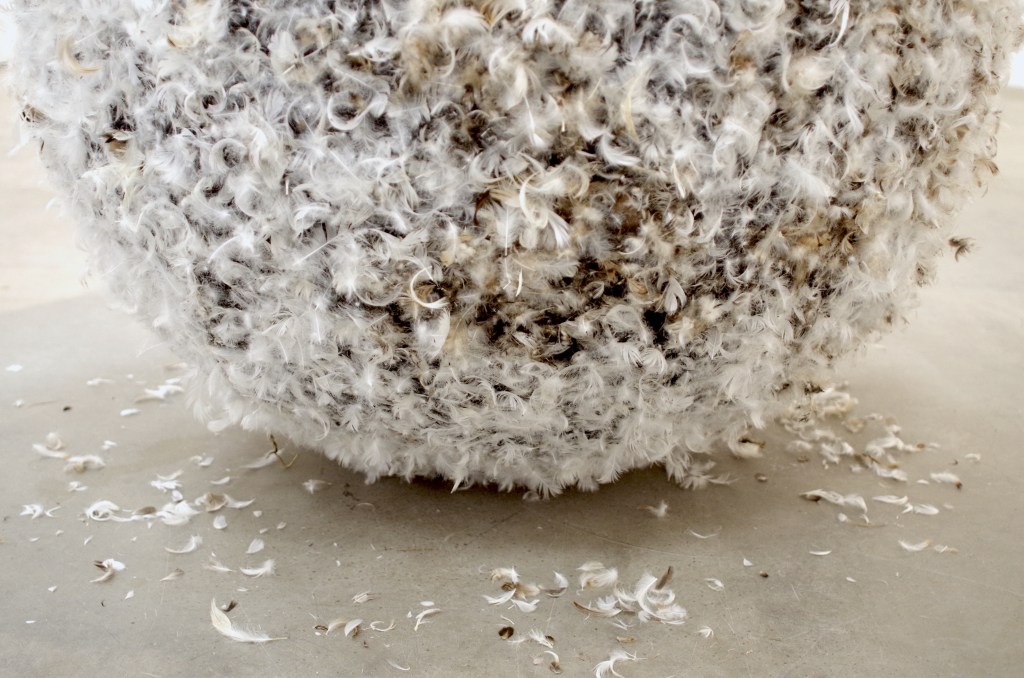
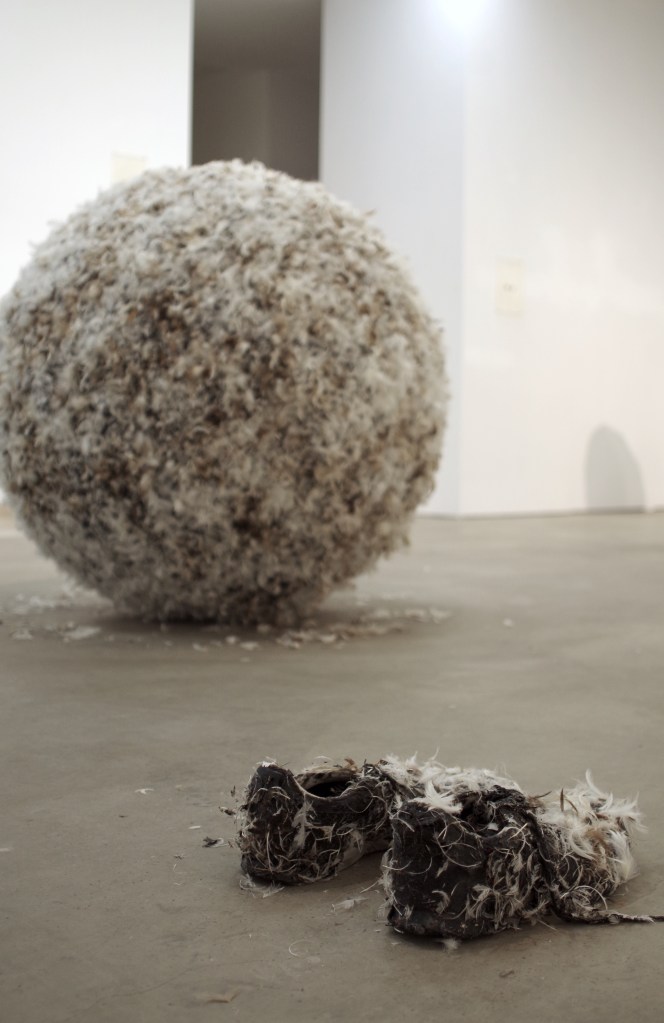
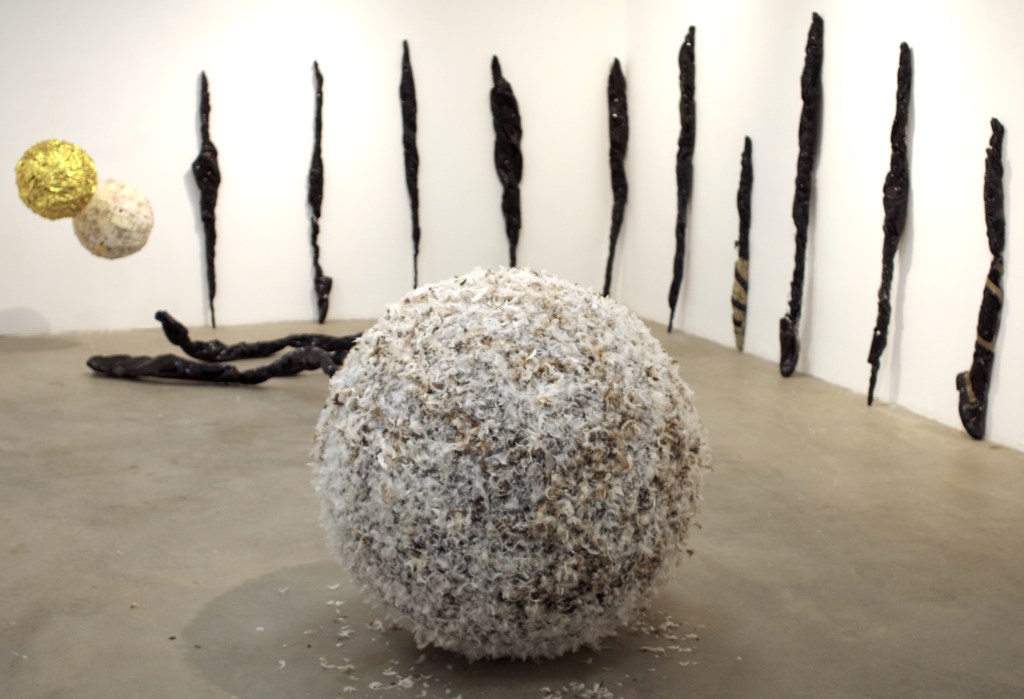
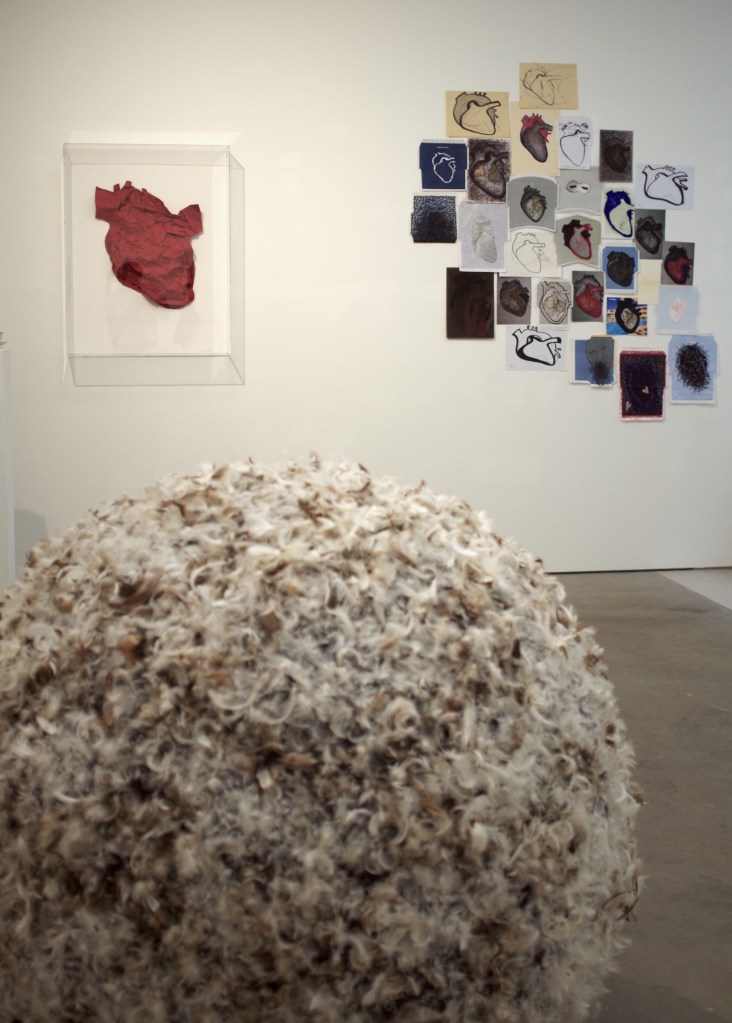
In her latest exhibition SHAME, Zuzanna Janin confronts the visualization of domestic violence, referencing both personal memory, the cultural history of shaming, and normative social conventions where masculinity is entangled in a mythology that sustains a patriarchal system of oppression. Central to the exhibition, the sculpture SHAME (2016), made of tar and goose feathers, combines materials of different physical as well as symbolic weights and absorbs cultural meanings, both past and present. Tarring and feathering, practiced in medieval Europe and the early modern period, was a form of public torture that involved stripping the person being punished naked and painting their body with hot wood tar, only to then roll them in feathers. This grotesque transformation of a person into a bird, or a simulacrum of nature’s thief (after William Sayers), was an extremely painful punishment, but not a fatal one, leaving scars on the skin and psychological trauma. Nowadays, public ostracism takes the form of online commentary, anonymous texts, videos, emails, or voice messages, catering to cyberbullying that any person can experience in the privacy of their home. The performed theatricality of tarring and feathering needed a stage and an audience, which social networks, Facebook friends, and Instagram followers have replaced today. Quoting Kosofsky Sedwick, the culture of shame does not divide, but unites.
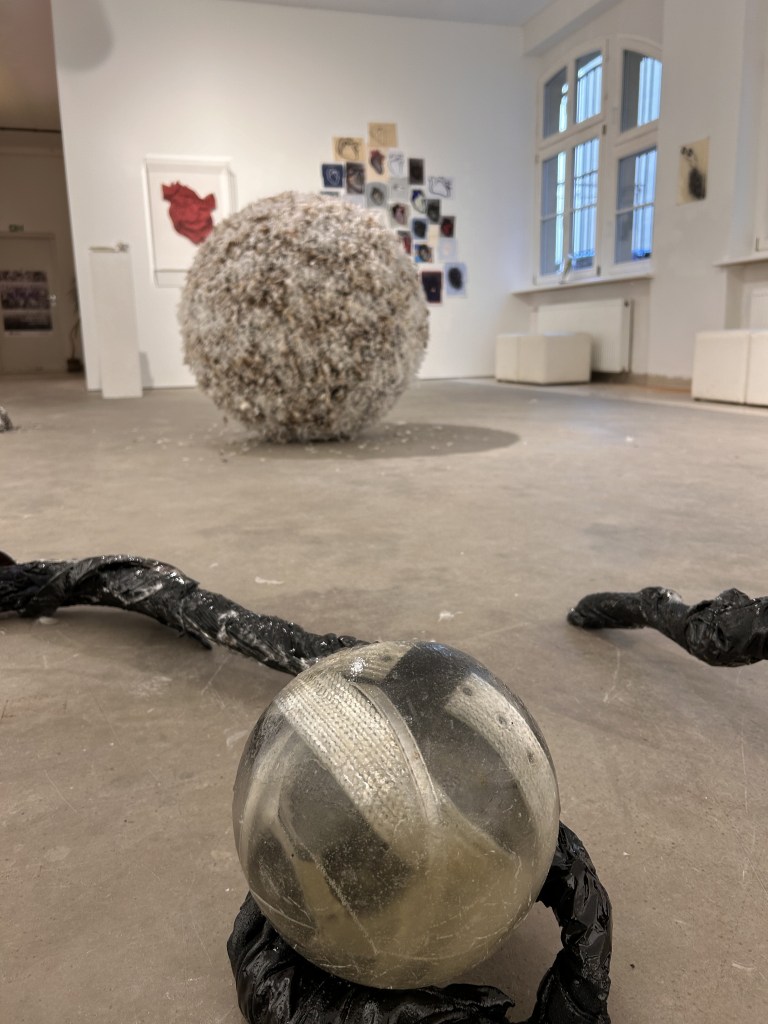
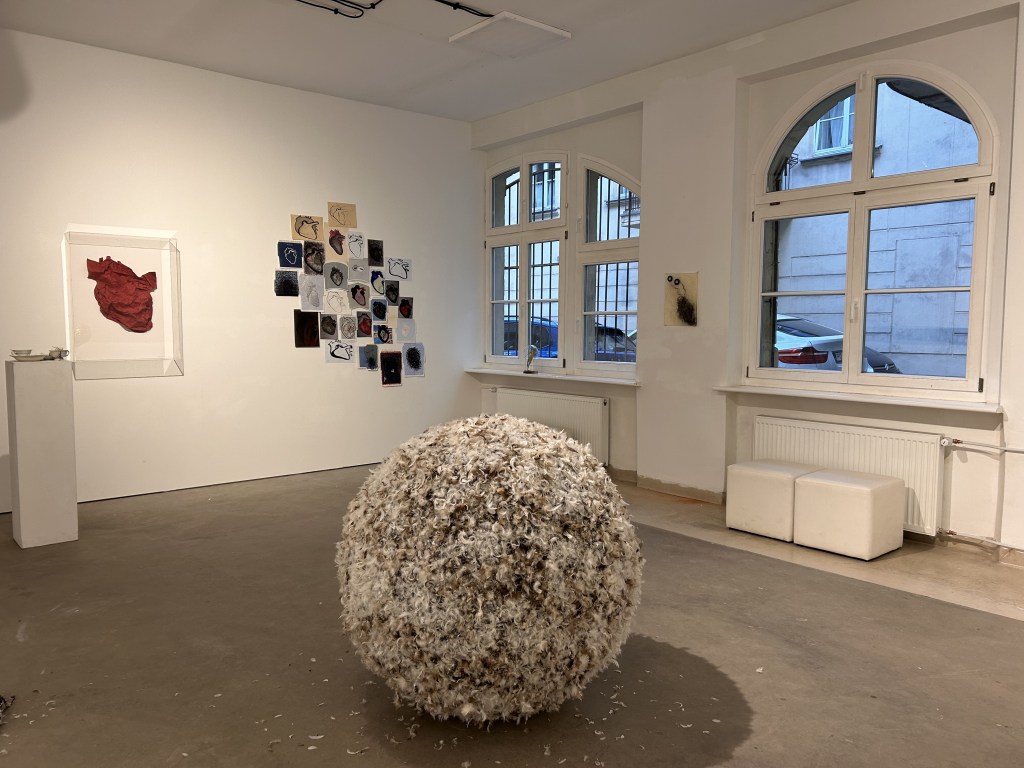
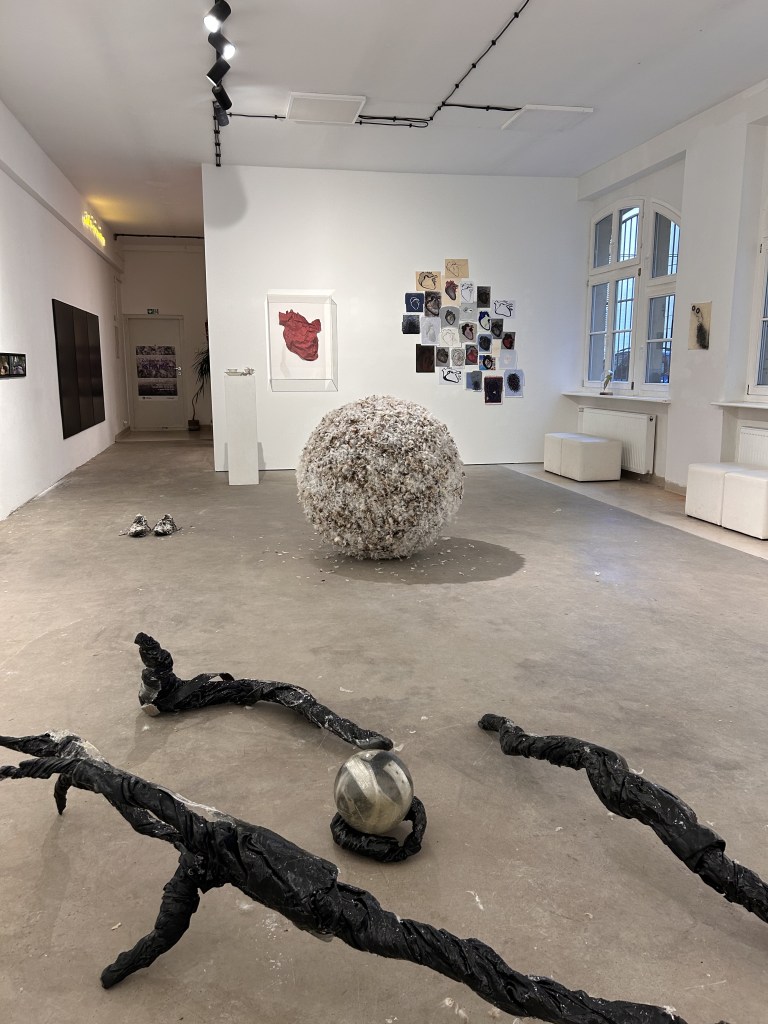
The SHAME globe viewed from afar brings to mind a monumentalized dandelion blowfly, ephemeral and light, sensitive to every gust of wind. On the other hand, seen up close, the thick tar-clad feathers stopped in their flow forming black tears adding weight to the composition. Doomed to ridicule, the globe displayed in the gallery space is a reminder of real and virtual exclusion, as well as the regressive mechanisms of social coexistence, which are united by hatred rather than love or care.
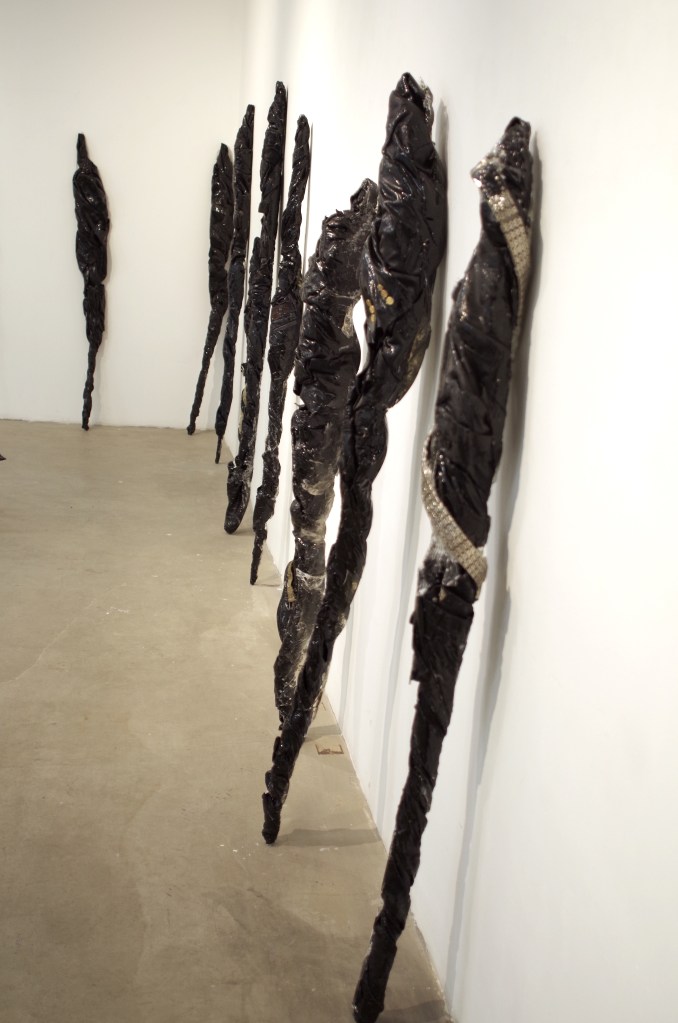
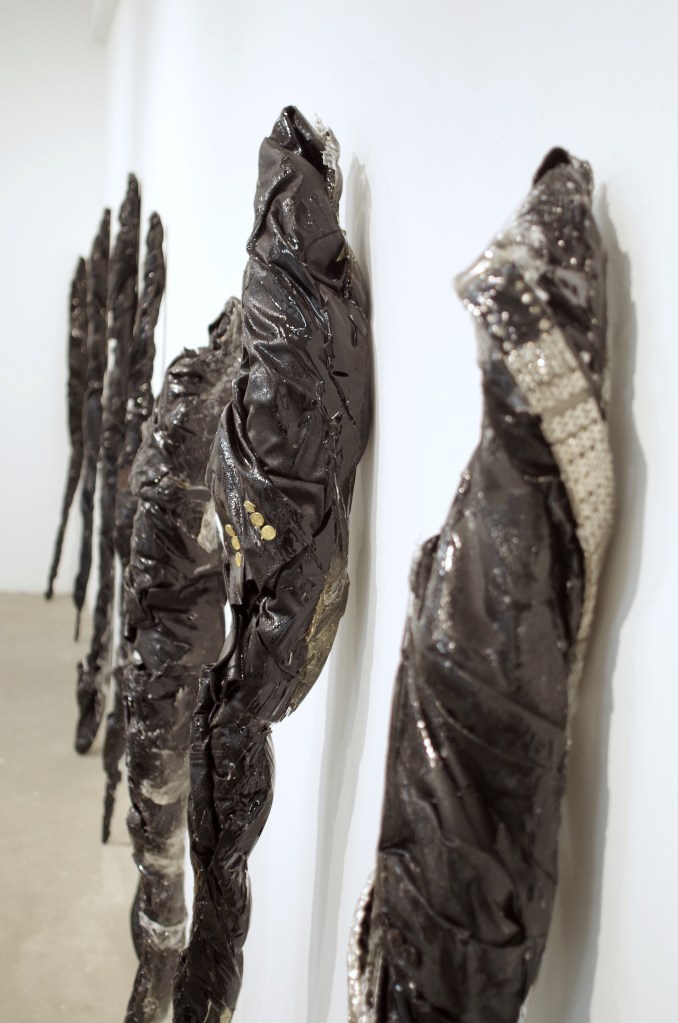
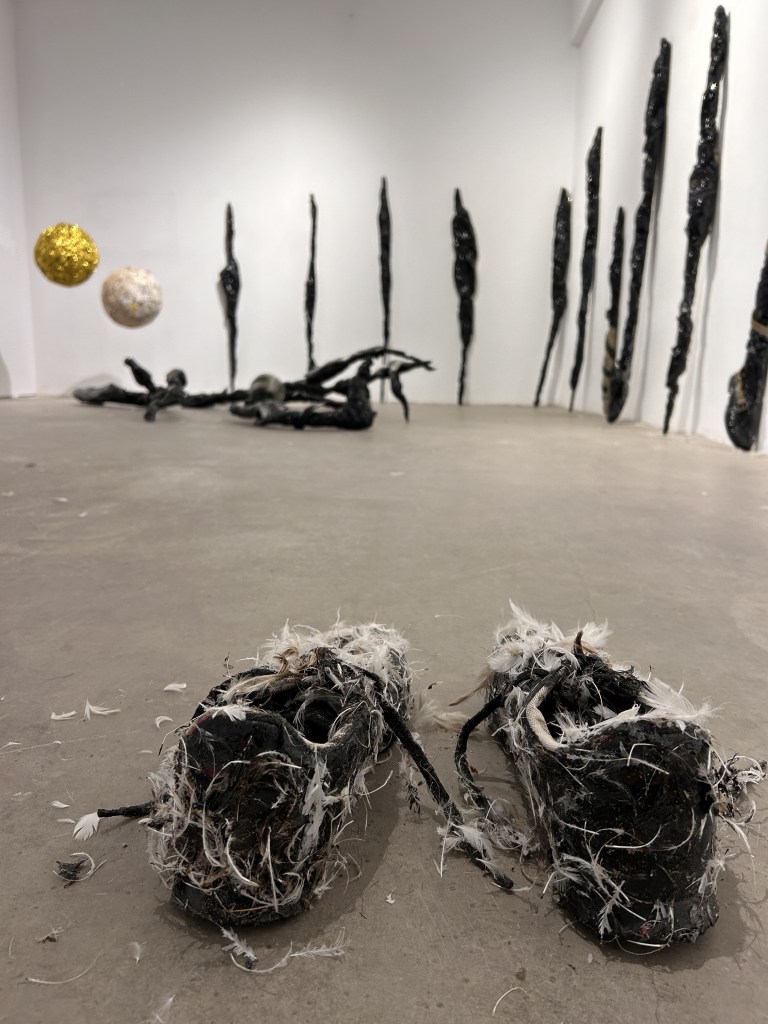
Seen in dialogue with SHAME Janin’s latest realizations, Pasygraphy (Swirls, Forests, and Clubs), in process since 2020, consists of sculptures made of twisted pieces of men’s wear (suits, pants, t-shirts, socks, underwear, shoes, leather, and metal belts) cast in epoxy resin. The title of the works signifies an artificially created international system of written characters, intended to represent concepts rather than specific words. This unique notation, reflecting the utopian universalism of understanding, can be applied to rachitic male figures, operating in the language of a patriarchal costume, devoid of body and soul, upholding contractual authority. Twisted and defeated, leaning against walls and lying on the floor, the constructs reflect the dominant masculinity in the culture. Known from psychoanalysis Lacanian Name of the Father, the Big Other and the guardian of the Law are experiencing a crisis, losing their balance and control over subjectivity, they are viewing themselves in the SHAME globe.
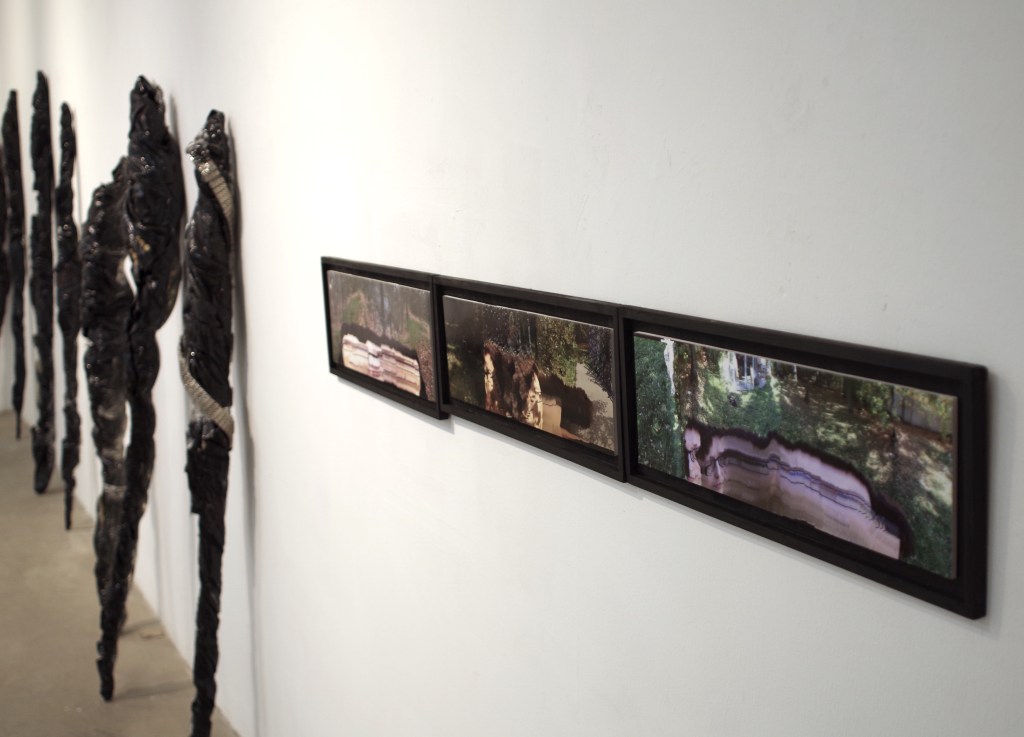
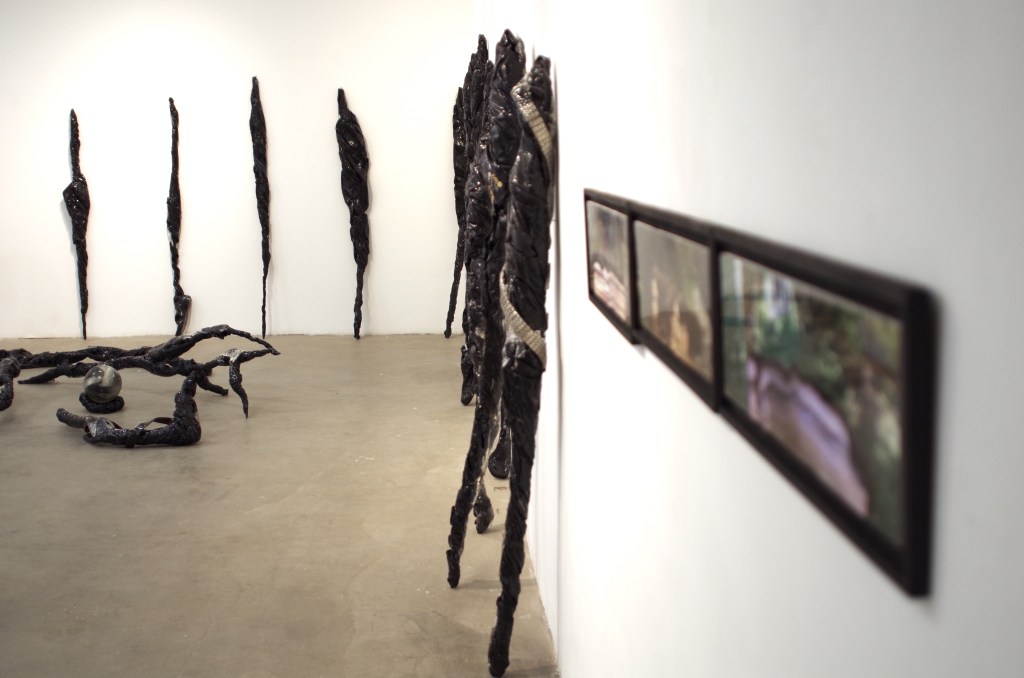
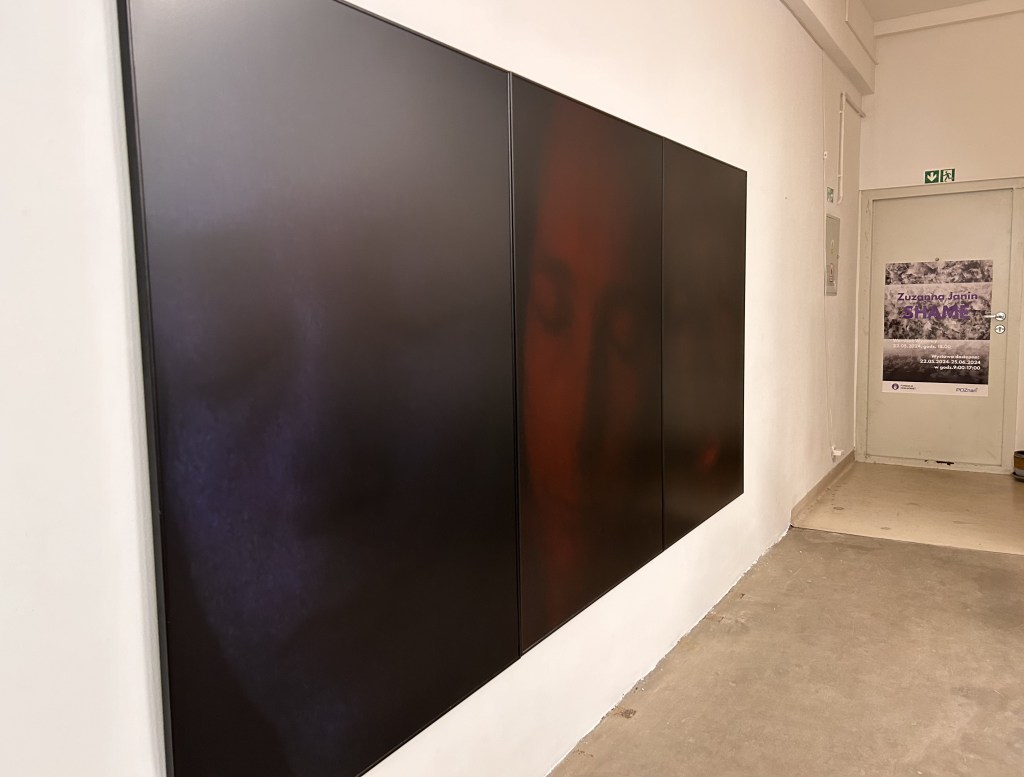
Another crucial work to the exhibition is the triptych In Bed with M. (Sleeping Blue. Red with Shame. Black Like Me). Created in 2014-2016, the photographs present a classification of violence, which Janin divides by colors into: blue – religious systems, black – exclusion and lack of knowledge about women, and red – shame. Significantly, this selfie series was created during sleepless nights, in bed, in the presence of a partner lying next to the artist. This physical proximity and at the same time psychological distance is reflected in extremely intimate frames showing the artist’s face with her eyes closed. As Janin emphasizes in her interview with SZUM: Red with Shame is a work about the emotion through which a victim of domestic violence is controlled. You are ashamed of what happens out of sight of others; that a person close to you disrespects and humiliates you so much. This you hide for fear of being misunderstood and socially rejected. The three colors mark the artist’s face with cultural connotations and also correspond to the photographic process of developing photos in the darkroom. The adapted perspective puts viewers in the position of voyeurs, peeping at the artist while she sleeps. At the same time, the work questions who owns the image: the photographer or the photographed, and when, and why, a photograph can be taken without looking.
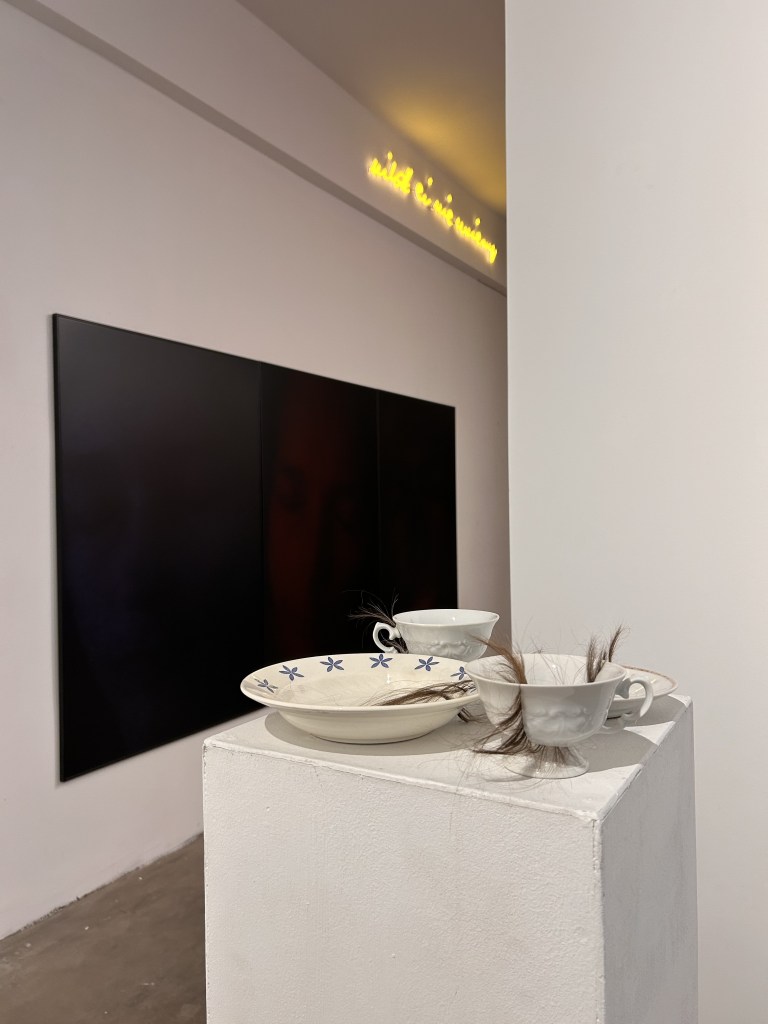
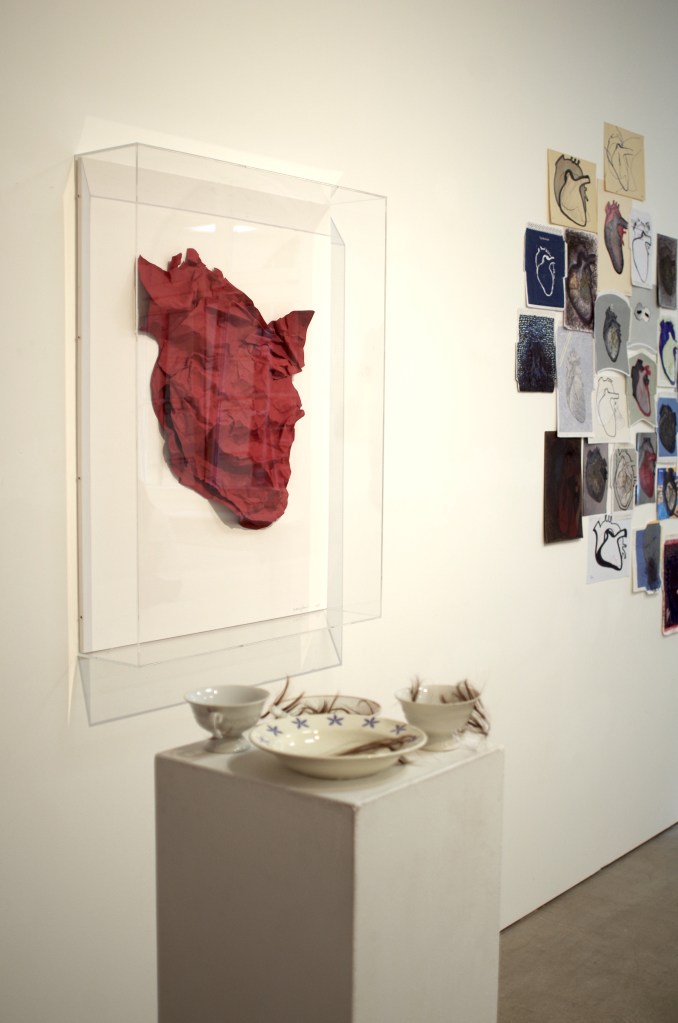
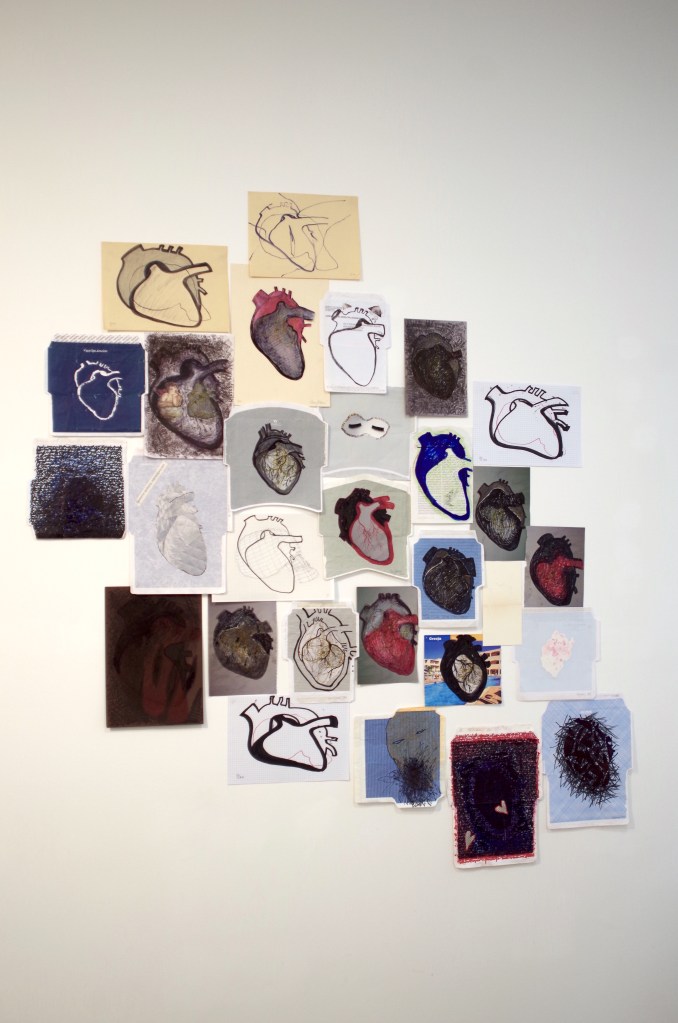
The metaphor of dormancy, as well as the inability to conform to the existing order of the world, is referred to in the Takotsubo series, created by the artist between 2017 and 2024. Takotsubo, derived from the medical language, also known as broken heart disease, is an acute yet reversible cardiac condition that, with its symptoms, resembles a heart attack (and other symptoms of cardiovascular diseases). This is a tale of an advancing disease, hidden in the body and therefore invisible in the sphere of social coexistence. Closed in a box, the monumentalized anatomically -shaped heart, crumpled and distorted, appears both as an alien creature or medical experiment isolated from the world and as a precious and delicate, worn-out material needing protection. As in the case of In Bed with M., domestic violence, remaining culturally silent, “eats” the artist from within. However, this does not mean a complete loss of the self, but rather a new establishment of the self, overcoming shame and asking for help, which is important in the context of the exhibition’s venue, the Galeria Czas Kobiet [Women’s Time Gallery], operating at a foundation that supports women in crisis. Seeking empowerment, the SHAME exhibition also seeks language and concepts that Survivors (not victims, but survivors) can use to talk about violence – without shame.
*E. Kosofsky Sedgwick, Shame, Theatricality and Queer Performativity: Henry James’s „The Art of Novel”, w: Touching Feeling. Affect, Pedagogy, Performativity, Duke University Press, Durham-London 2003.
Curatorial text + photos
Julia Stachura
 Julia stachura
Leave a comment