YOU LOVE HOME AND THE SILENCE OF ITS OWN
In her latest exhibition, You Love Home and the Silence of Its Own [Kochasz ty dom co ciszą swą], Joanna Piotrowska looks at female protagonists in domestic interiors, defending themselves against an invisible force. Entangled in hierarchies of power and systems of family dependency, the women seek security in structures arranged from everyday objects. The exhibition’s title draws inspiration from Maria Konopnicka’s poem, Song of Home, which begins with the anaphora you love home. The artist carefully and intimately observes the value of the home, with its instabilities and manufactured relationships, as are the portrayed figures frozen in theatrical poses.
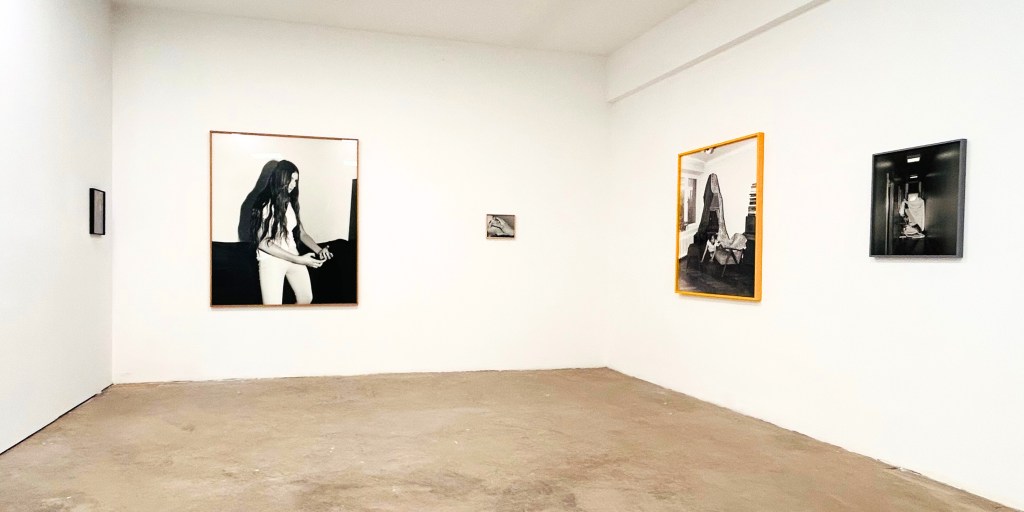
The majority of the works on display are from the Shelters series (2016-2017), which shows shelters made up of furniture, blankets, or books – particularly domestic objects especially close to the body. These rachitic constructions bear the marks of both the spontaneous nature of children’s play and a studied arrangement reminiscent of theatrical staging. Described as a mise en scène, or an environment under the director’s control, collecting elements of visual composition, set design, props, lighting, movement, and acting creates the impression of meticulously managed frames. All these procedures, characteristic of Piotrowska’s photography, create a tension between performance to camera and documentary. Balancing on the border of Freudian uncanny/das Unheimliche, the works in the Shelters series combine something familiar and alien at the same time, evoking a feeling of unease and even fear, heightened by the fact that each of the depicted figures is protecting himself from something. Paradoxically, this sense of danger is not built up by darkness or shadow but by ruthless light, exposing both the interiors and the people.
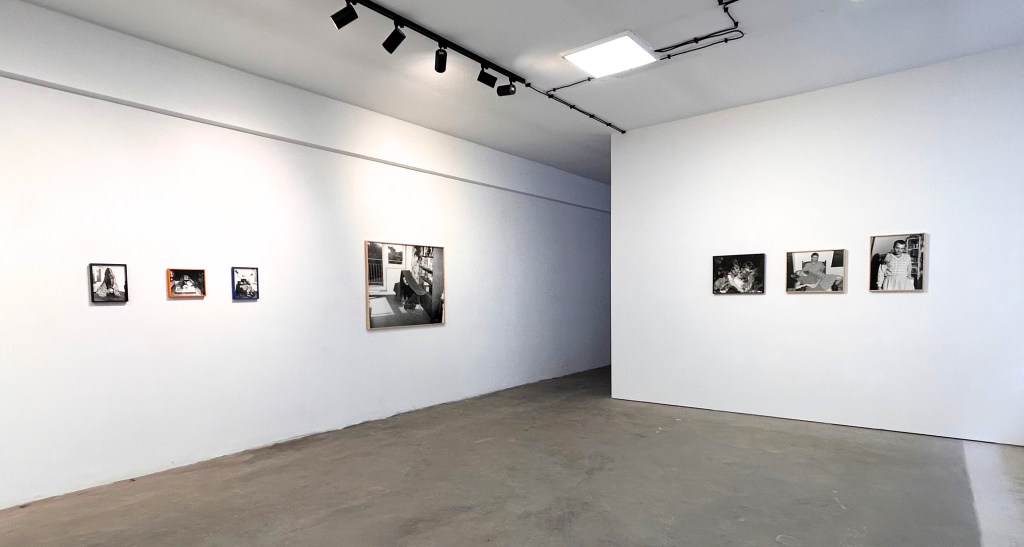
Piotrowska’s photographs are reminiscent of scenes from the movie Dogtooth, directed by Yorgos Lanthimos, in which the home becomes a field of parental control, a lampshade that, instead of protecting, becomes a violent prison. The dogtooth in the title is the tooth used for tearing food and, most importantly, defense, removed by the heroine, symbolizing the process of maturation and self-determination in the face of paternalistic authority. Similarly, in Piotrowska’s heroines, captured in claustrophobic shelters, defend themselves against domestic systems of oppression. Also relevant to Shelters is the body’s status, playing roles and repeating gestures, suspended between proximity and distance, activity, and passivity. This liminal state of uncanny produces, a characteristic of Piotrowska’s, impression of a performative document, in which the artist’s excavated relations between people and their surroundings evoke magical realism.
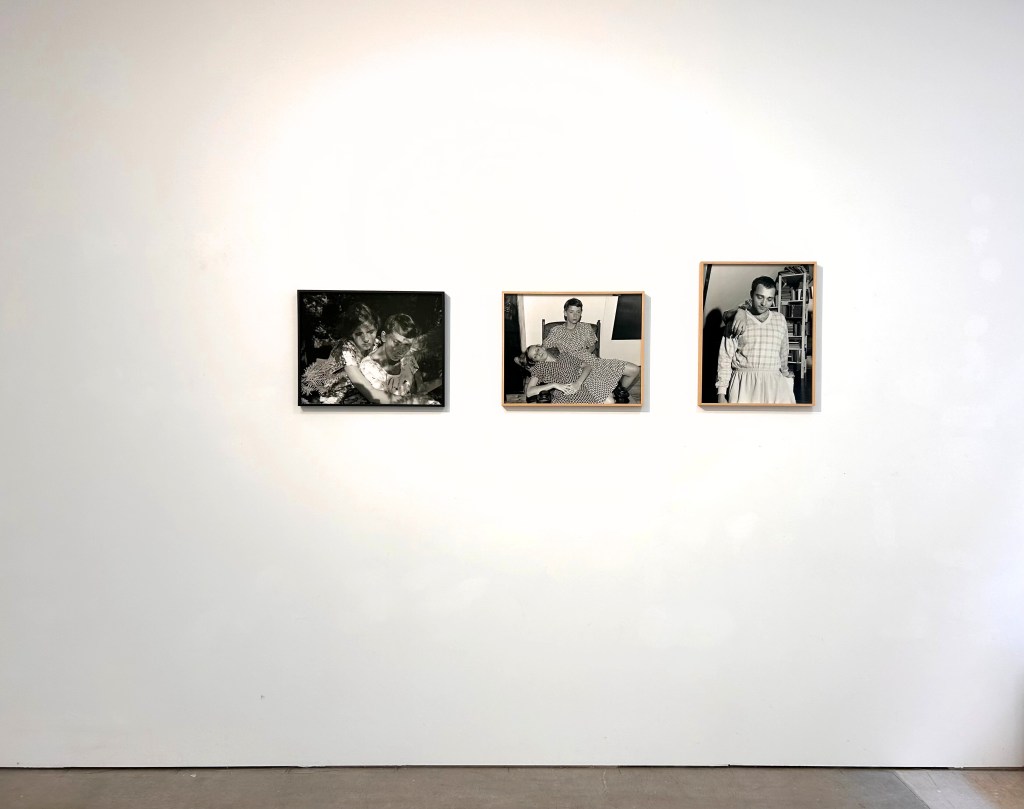
Some works from the earlier series, Frowst (2013-2014), are also shown at the exhibition. The title, evoking family or partner relationships and closeness bordering on control, corresponds with the message of Shelters. Exploring the intimacy of intertwined bodies, Piotrowska looks for oppressive and unnatural gestures, frozen in hugs that take away all the air. The artist simultaneously imitates and breaks the conventions of family photography, using the settings of Bert Hellinger, the creator of a method for sorting out tangled and broken family ties. Hellinger’s practice, criticized by modern science for psychomanipulation, served Piotrowska as a tool for exposing pseudo-scientific theories while revealing the artificiality of cultural conventions produced around the concept of family.
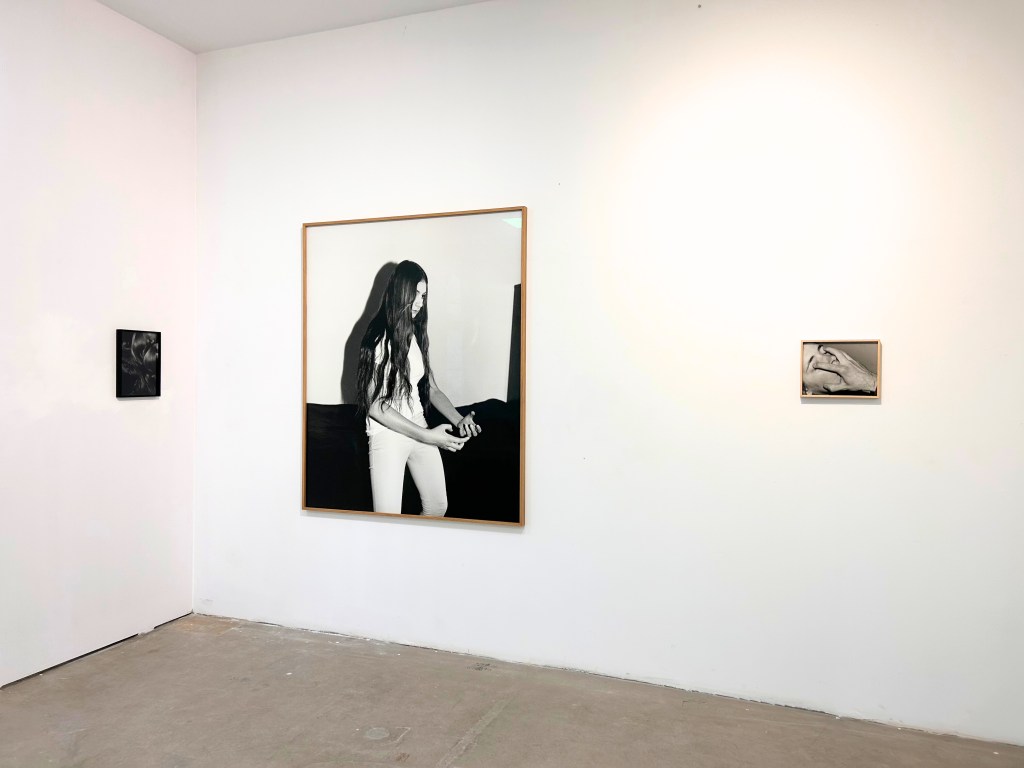
The photographs, made using the same technique but presented in different print sizes, generate two types of movement – zooming in and out, symbolically touching on problems on a micro- and macro-scale. The frames in vivid colors, contrasting with black-and-white photographs, evoke the impression of children’s play. The portrayed moments of seeking shelter in a gesture of self-defense and self-care resonate in a special way with the situation of women for whom the home is a threat. Significantly, the works presented in the exhibition were selected in the context of the place, the Women’s Time Foundation, where women experiencing domestic abuse can find asylum on a daily basis.
Julia Stachura
06/27/24 -07/25/24
FUNDACJA CZAS KOBIET / GALLERY WOMEN’S TIME, POZNAŃ, POLAND
cooperation: Maria Czarnecka, Monika Młynarczyk (Fundacja Czas Kobiet) Dawid Radziszewski Gallery, ING Fundacja Sztuki Polskiej, Jakub Mrówka, Andrzej Skrzyński, Andrzej Piasecki, Małgorzata Bożek, Monika Pakulska, Sebastian Rogowski
Photos: Julia Stachura
 Julia stachura
Leave a comment